
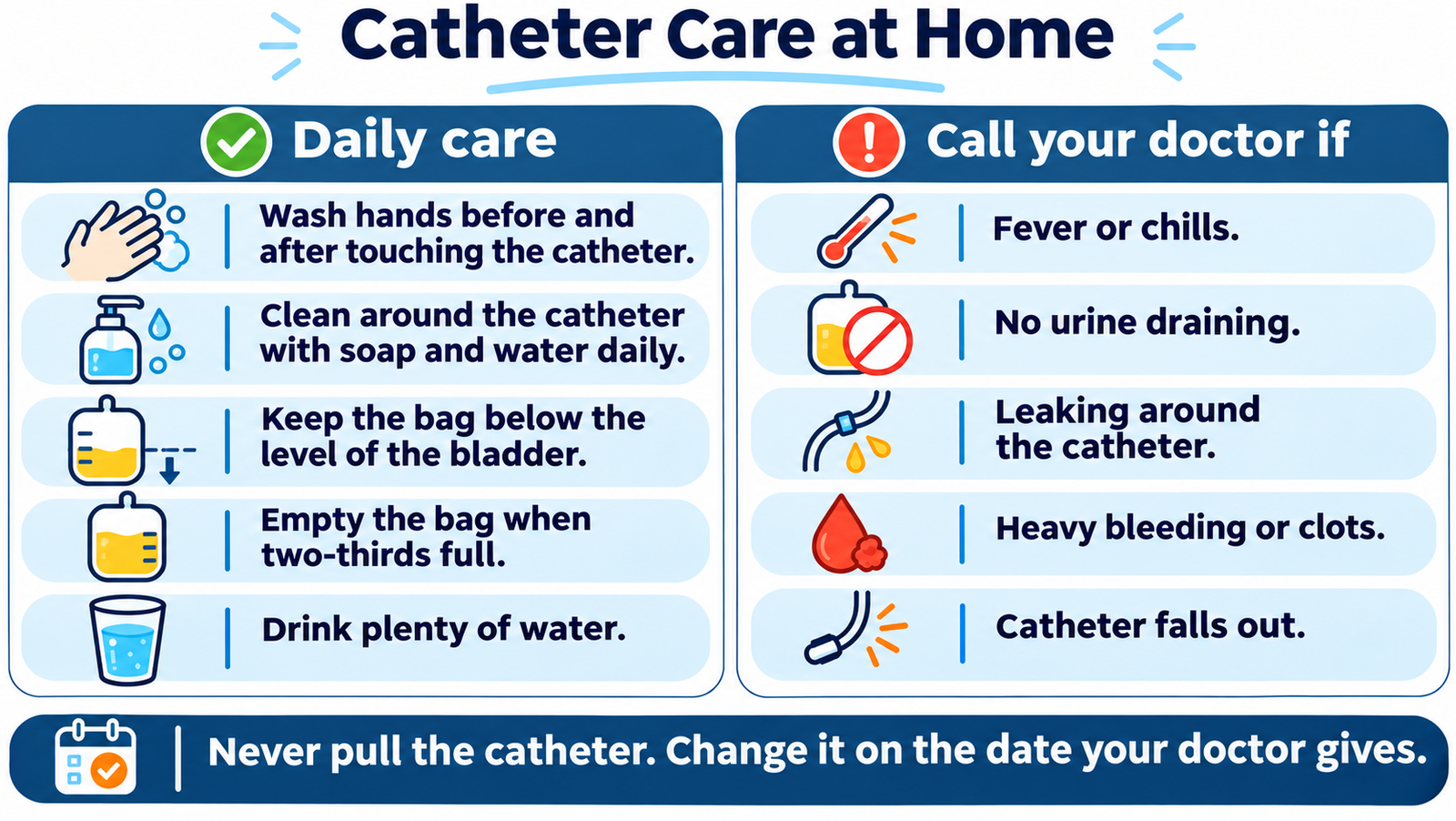
Catheter care at home helps prevent infection and blockage. A urinary catheter is a soft tube that drains urine from the bladder into a bag.
Keeping clean
- Wash your hands with soap and water before and after touching the catheter or bag.
- Clean the area where the catheter enters the body once a day with mild soap and water, then dry gently.
- Women: always clean from front to back.
- Men: gently pull back the foreskin, clean, then always return the foreskin to its normal position.
- Do not use powders, creams or antiseptic lotions around the catheter unless your doctor advises it.
- A daily bath or shower is fine.
Looking after the bag
- Keep the bag below the level of the bladder at all times, but never on the floor.
- Make sure the tube is not twisted or kinked.
- Strap the tube to your thigh so it does not pull.
- Empty the bag when it is about two-thirds full, and before bed.
- Do not disconnect the bag from the catheter unless you have been shown how to.
Drink well
- Drink enough water to keep your urine pale, unless your doctor has advised a fluid limit.
- Avoid constipation, because it can affect drainage.
Catheter changes
- A standard (latex) catheter is usually changed about every 2 weeks.
- A silicone catheter can usually stay for up to 4 weeks.
- It may be changed sooner if it blocks, leaks badly, or if you develop an infection.
- Always follow the change date given by your doctor.
Contact us if
- No urine drains for 2 to 3 hours and your tummy feels full or painful
- Urine leaks a lot around the catheter
- You have fever, shivering or feel very unwell
- There are blood clots or heavy bleeding
- The catheter falls out. Do not try to put it back yourself.
Read more: All patient resources
This leaflet gives general information and does not replace advice from your own doctor.