
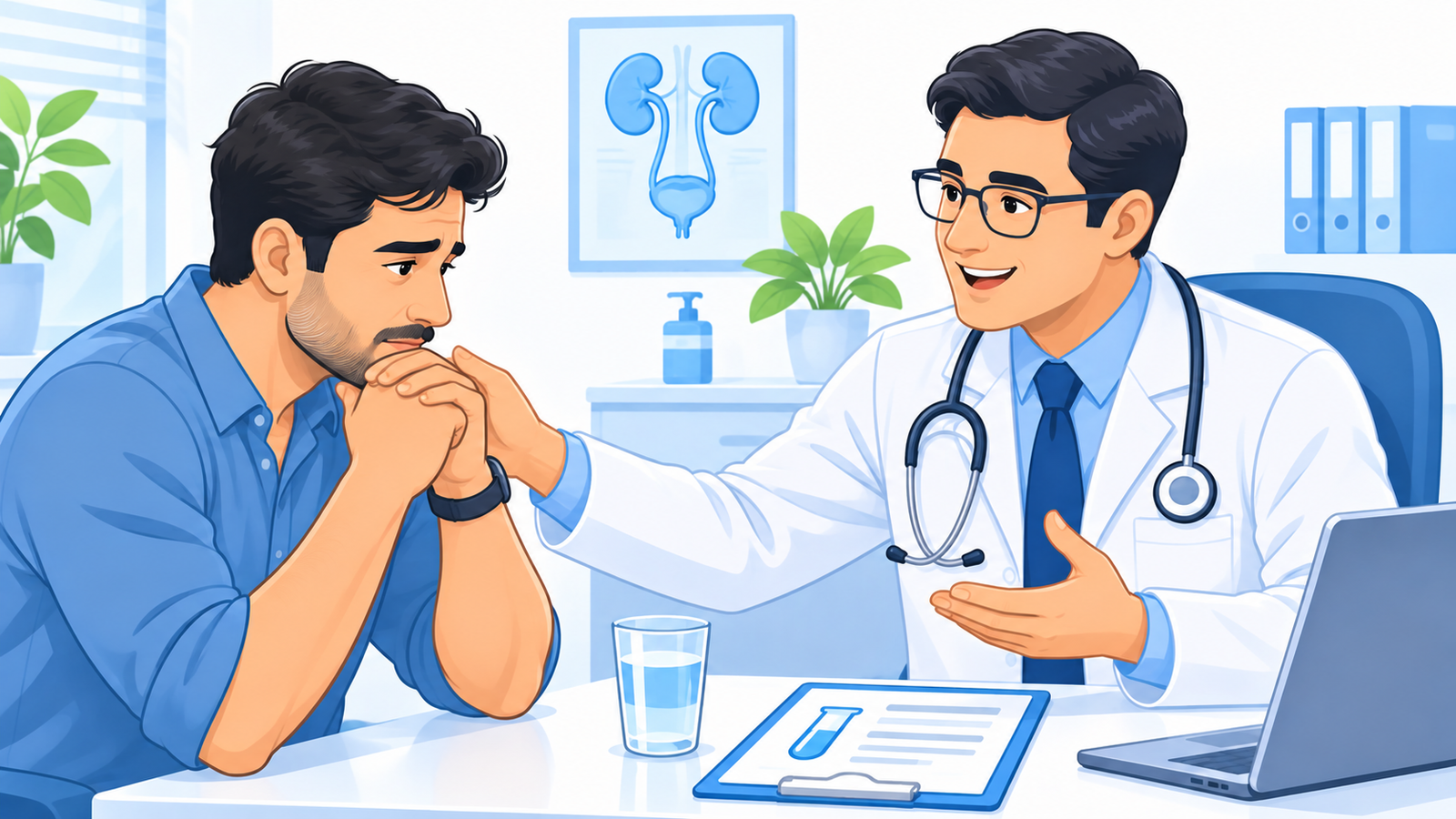
Written and medically reviewed by Dr Sudeep, Consultant Urologist and Andrologist. Last updated: 21 November 2026.
What is Dhat syndrome?
Dhat syndrome is a condition in which a man becomes deeply worried that he is losing semen (“dhat”) through urine, night-time emissions or masturbation, and believes this is making him weak or ill. It is common in India and other parts of South Asia, especially in young men. The good news is that semen loss does not cause physical weakness, and with the right information and treatment, men with Dhat syndrome recover well.
Table of Contents
Where does the belief come from?
In traditional beliefs, semen is seen as a precious “vital fluid” made from many drops of blood, and losing it is thought to drain strength. These ideas are passed on by family, friends, and roadside “sex clinics” or advertisements that profit from the fear. Modern medicine has shown that these beliefs are not true.
The facts about semen
- The body makes sperm and semen continuously, every day, throughout adult life.
- Unused semen is naturally reabsorbed or released, for example as night-time emissions (“nightfall”).
- Night-time emissions and masturbation are normal and do not cause weakness, illness, ED or infertility.
- Semen is not made from blood, and losing it does not reduce strength, height, memory or eyesight.
Common symptoms men describe
- Belief that semen is passing in the urine
- White or cloudy urine
- Tiredness, weakness or lack of energy
- Poor concentration and memory
- Worry, guilt and low mood
- Body aches, poor sleep and loss of appetite
- Worry about erections, early ejaculation or marriage
These symptoms are real and distressing, but they usually come from anxiety and stress, not from semen loss.
Why might urine look white or cloudy?
Cloudy urine is common and usually harmless. It can be caused by:
- Phosphates: normal salts in urine, especially after meals or milk
- Not drinking enough water: concentrated urine
- A small amount of semen after ejaculation, which is normal
- Urine infection, which can be checked with a simple test
A simple urine test can confirm what is in the urine, and is very reassuring for most men.
How is it diagnosed?
Your urologist will listen to your concerns privately and without judgement, then may advise:
- An examination of the genitals, which is usually normal
- A urine test, and sometimes a test of urine after passing semen
- Blood tests, such as sugar, if you feel tired
- A check for anxiety or low mood
Treatment
- Clear explanation and reassurance: understanding the facts about semen is the most important step
- Treating any real problem: such as a urine infection, early ejaculation or ED, if present
- Counselling: talking therapy, especially cognitive behavioural therapy, helps reduce worry and guilt
- Medicines: sometimes, for anxiety or low mood, prescribed by a doctor
- Healthy lifestyle: good sleep, regular exercise, a balanced diet and limiting alcohol and tobacco
Avoid roadside clinics, “sex power” capsules and unbranded medicines. They often contain hidden drugs or steroids, can be harmful, and keep the fear going.
When to see a doctor
- Worry about semen loss that affects your daily life, sleep or work
- Pain, burning or blood in the urine or semen
- Real problems with erections or ejaculation
- Feeling very low, hopeless or anxious
Common questions
Is nightfall a disease? No. Night-time emissions are a normal, healthy part of male sexual function.
Does masturbation cause weakness or infertility? No. It is normal and does not cause weakness, ED or infertility.
Can Dhat syndrome affect my marriage? Worry can affect confidence, but once the fear is treated, most men have a normal sexual and married life.
Is Dhat syndrome curable? Yes. With the right information, counselling and care, most men recover fully.
Book a consultation
If you are worried about semen loss, weakness or sexual health, book a private, confidential consultation with Dr. Sudeep Singh, Consultant Urologist and Andrologist in Panchkula, for honest answers and real reassurance.
This article is for general education and does not replace advice from your own doctor.