
Written and medically reviewed by Dr Sudeep, Consultant Urologist and Andrologist. Last updated: 16 November 2026.
What was done?
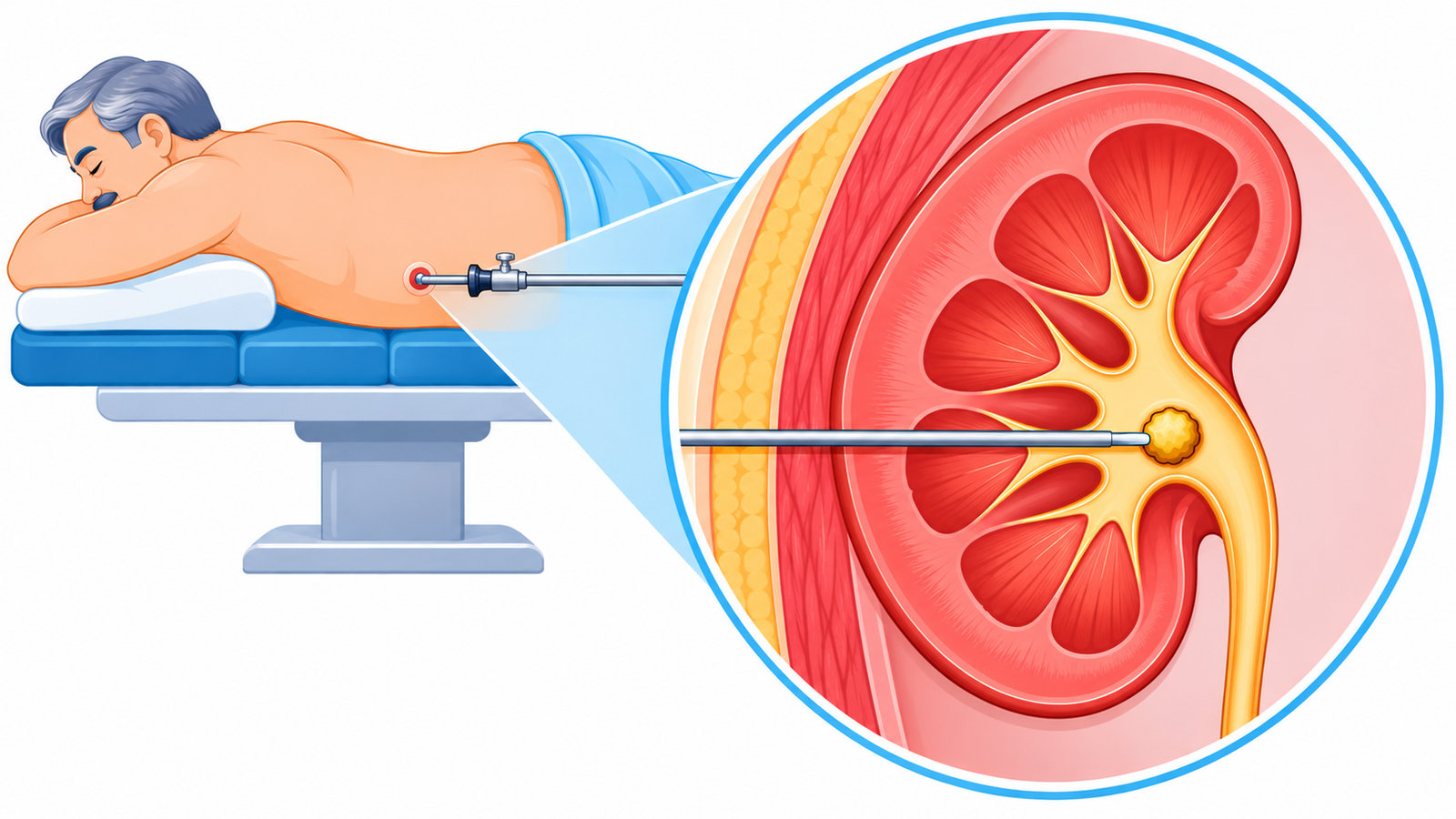
Recovery after PCNL kidney stone surgery is usually smooth, and most people are back to normal within 2 to 4 weeks. PCNL (percutaneous nephrolithotomy) removes larger kidney stones through a small cut in the back, using a thin telescope passed directly into the kidney. Mini-PCNL uses an even smaller tract, which often means less pain, less bleeding and a quicker recovery.
Tubes you may have
- Nephrostomy tube: A thin tube from your back into the kidney, draining urine into a bag. It is usually removed before you go home, often within 1 to 2 days. Some patients, especially after mini-PCNL, do not need one at all (tubeless PCNL).
- DJ stent: A soft tube inside you, running from the kidney to the bladder, to help urine drain while the kidney heals. You cannot see or feel it from outside. It must be removed later, usually after 2 to 4 weeks. See our DJ stent guide.
- Urinary catheter: Usually removed within 1 to 2 days.
The first few weeks at home: what is normal
- Pain at the wound: Mild soreness in your back or side, eased by simple painkillers.
- Blood in urine: Pink urine is common for a few days, especially with a stent.
- Leak from the tube site: A small amount of urine-coloured fluid may leak from where the nephrostomy tube was, for 1 to 2 days. Keep a clean dressing on it and change it when wet.
- Stent symptoms: Frequency, urgency, burning, or discomfort in the side when passing urine are common while the stent is in.
Tips for recovery after PCNL
- Drink well: About 2.5 to 3 litres a day, so your urine stays pale.
- Wound care: Keep the dressing dry for 2 days. You can shower after that. Avoid soaking in a tub until the wound has healed.
- Activity: Walk every day. Avoid heavy lifting, gym work and two-wheeler riding for about 2 to 4 weeks.
- Work and driving: Desk work and driving usually after about 1 to 2 weeks.
- Medicines: Take painkillers and any prescribed medicines as advised. Restart blood thinners only when your doctor says so.
- Stent removal: Do not miss your stent removal date. A forgotten stent can cause serious problems.
Preventing new stones
About half of people who have had a kidney stone will form another within 5 to 10 years. Your stone may be sent for analysis, and you may need blood and urine tests to find the cause. Drinking plenty of fluids and following the right diet are the most important steps. See our kidney stone prevention, diet and fluid guide.
Contact your doctor urgently if you have
- Fever, chills or shivering
- Heavy bleeding, thick red urine or clots
- Bleeding or a lot of fluid from the wound that does not stop
- Severe pain not helped by painkillers
- You cannot pass urine
- Breathlessness or chest pain
Follow-up
Your doctor will usually see you in 2 to 4 weeks, often with an X-ray or scan to check that the kidney is clear of stones, and to plan stent removal.
Common questions
Will I have a big scar? No. The cut is small, often about 1 cm, and smaller still after mini-PCNL.
Is PCNL safe for my kidney? Yes. The kidney heals well, and kidney function is usually preserved.
Can stones come back after PCNL? They can, which is why prevention and follow-up matter.
For more information, see the European Association of Urology guide on PCNL.
This guide is for general education and does not replace advice from your own doctor.