
Prostatitis means inflammation of the prostate gland. It can cause pain in the lower tummy, groin or between the legs, burning while passing urine, and sometimes fever. Unlike an enlarged prostate, prostatitis can affect men of any age, including young men. The good news is that most types of prostatitis can be treated or well controlled.
Table of Contents
What is the prostate?
The prostate is a small gland, about the size of a walnut, that sits just below the bladder in men. The urethra (the urine passage) runs through it. It makes part of the fluid in semen.
Types of prostatitis
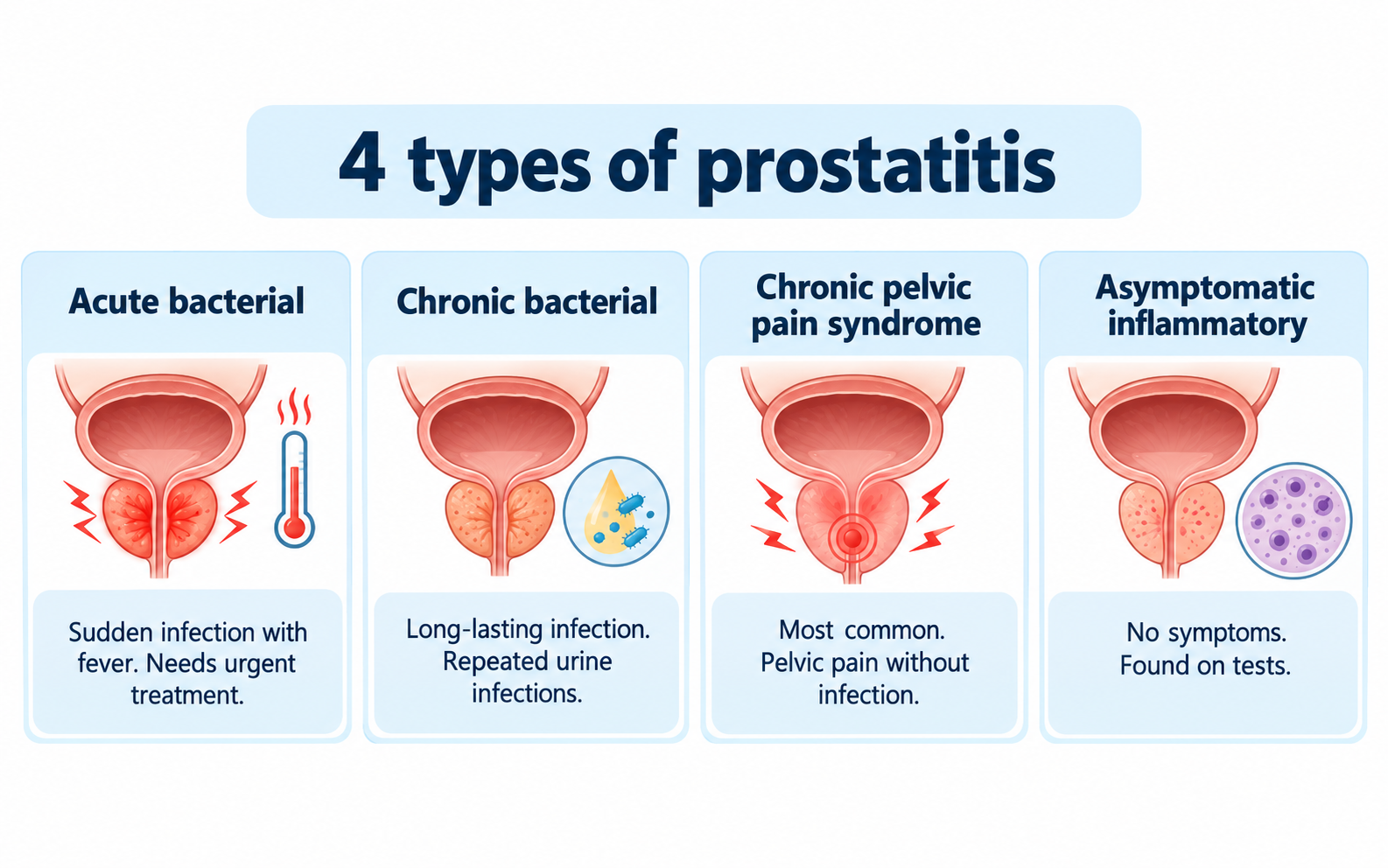
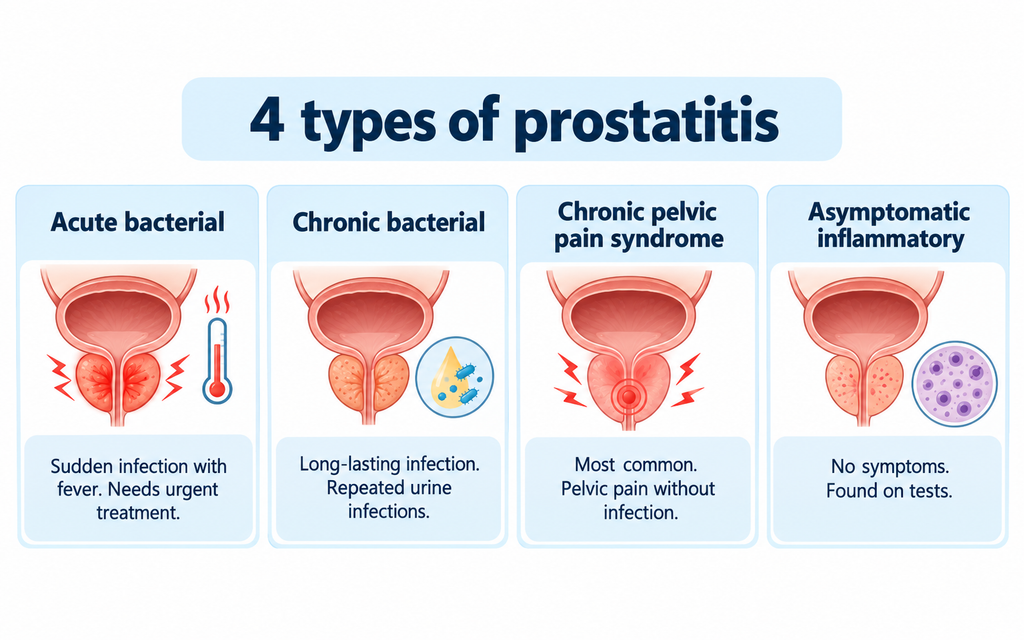
There are four main types:
- Acute bacterial prostatitis: a sudden bacterial infection of the prostate. It causes fever and severe symptoms and needs urgent treatment.
- Chronic bacterial prostatitis: a long-lasting or repeated bacterial infection, often causing urine infections that keep coming back.
- Chronic prostatitis / chronic pelvic pain syndrome (CPPS): the most common type. It causes pelvic pain for 3 months or more, but no infection is found.
- Asymptomatic inflammatory prostatitis: inflammation found only on tests done for another reason. It causes no symptoms and usually needs no treatment.
Prostatitis symptoms
Symptoms depend on the type, but may include:
- Pain in the area between the scrotum and the back passage (perineum)
- Pain in the lower tummy, groin, lower back, penis or testicles
- Burning or pain while passing urine
- Passing urine often, or a strong urge to go
- A weak stream, or difficulty passing urine
- Pain during or after ejaculation
- Fever, chills and body aches in acute bacterial prostatitis
When is prostatitis an emergency?
Seek medical help the same day if you have:
- Fever or shivering with pain or burning while passing urine
- Inability to pass urine
- Severe pain in the lower tummy or between the legs
Acute bacterial prostatitis can spread to the blood if it is not treated quickly.
What causes prostatitis?
- Bacterial prostatitis is caused by bacteria, often the same ones that cause urine infections, reaching the prostate.
- Chronic pelvic pain syndrome has no single cause. Tight pelvic floor muscles, nerve irritation, past infection, stress and anxiety may all play a part.
Risk factors include a recent urine infection, a catheter, a recent prostate biopsy, urethral stricture and an enlarged prostate.
How is prostatitis diagnosed?
Your urologist may advise:
- A urine test and urine culture to look for infection
- A gentle examination, including a prostate check. In acute prostatitis, the prostate is not massaged because this can spread infection.
- Blood tests if you have fever
- An ultrasound to check bladder emptying, or to look for a collection of pus (abscess)
- Tests of urine before and after prostate massage, sometimes, in chronic bacterial prostatitis
- A symptom questionnaire to measure how symptoms affect you
PSA can rise during prostatitis, so it is usually not checked during an active infection.
Prostatitis treatment
Acute bacterial prostatitis
- Antibiotics, usually for 2 to 4 weeks
- Hospital admission for antibiotics through a drip if you are very unwell
- A catheter if you cannot pass urine
- Drainage, rarely, if an abscess forms
Chronic bacterial prostatitis
- A longer course of an antibiotic that reaches the prostate well, usually for 4 to 6 weeks
- Treatment of any cause of repeated infection, such as a stricture or poor bladder emptying
Chronic pelvic pain syndrome
Because there is no infection, repeated antibiotics usually do not help. Treatment is tailored to your symptoms and may include:
- Alpha blockers to ease urinary symptoms
- Pain relief, including medicines for nerve pain when needed
- Pelvic floor physiotherapy to relax tight muscles
- Warm sitz baths
- Managing stress and anxiety, which can make pain worse
- Avoiding triggers, such as long cycling, spicy food, alcohol and too much caffeine for some men
Many men improve with a combination of these measures, although it can take time.
Living with chronic prostatitis
Chronic pelvic pain syndrome can be frustrating, but it is not cancer and does not lead to cancer. It does not cause infertility in most men. Working with your urologist, being patient with treatment, and looking after your general wellbeing all help.
Frequently asked questions
Is prostatitis sexually transmitted?
Most prostatitis is not sexually transmitted. In younger, sexually active men, infections such as chlamydia or gonorrhoea can sometimes be involved, so your doctor may test for them.
Can prostatitis cause high PSA?
Yes. Prostatitis can raise PSA. Your doctor will usually repeat the PSA after treatment, once the inflammation has settled.
Does prostatitis cause cancer?
No. Prostatitis does not cause prostate cancer.
Can prostatitis come back?
Yes. Chronic bacterial prostatitis and chronic pelvic pain syndrome can recur. Finding and treating the underlying cause helps reduce this.
Can young men get prostatitis?
Yes. Unlike an enlarged prostate, prostatitis is common in men aged 20 to 50.
If you have pelvic pain, burning while passing urine, or fever with urinary symptoms, see a urologist so prostatitis can be properly diagnosed and treated.
This article is based on the European Association of Urology (EAU) Guidelines on Urological Infections and Chronic Pelvic Pain.
Read more: PSA test: normal range and high PSA causes
Read more: Enlarged prostate (BPH): symptoms, causes and treatment
Read more: BPH warning signs